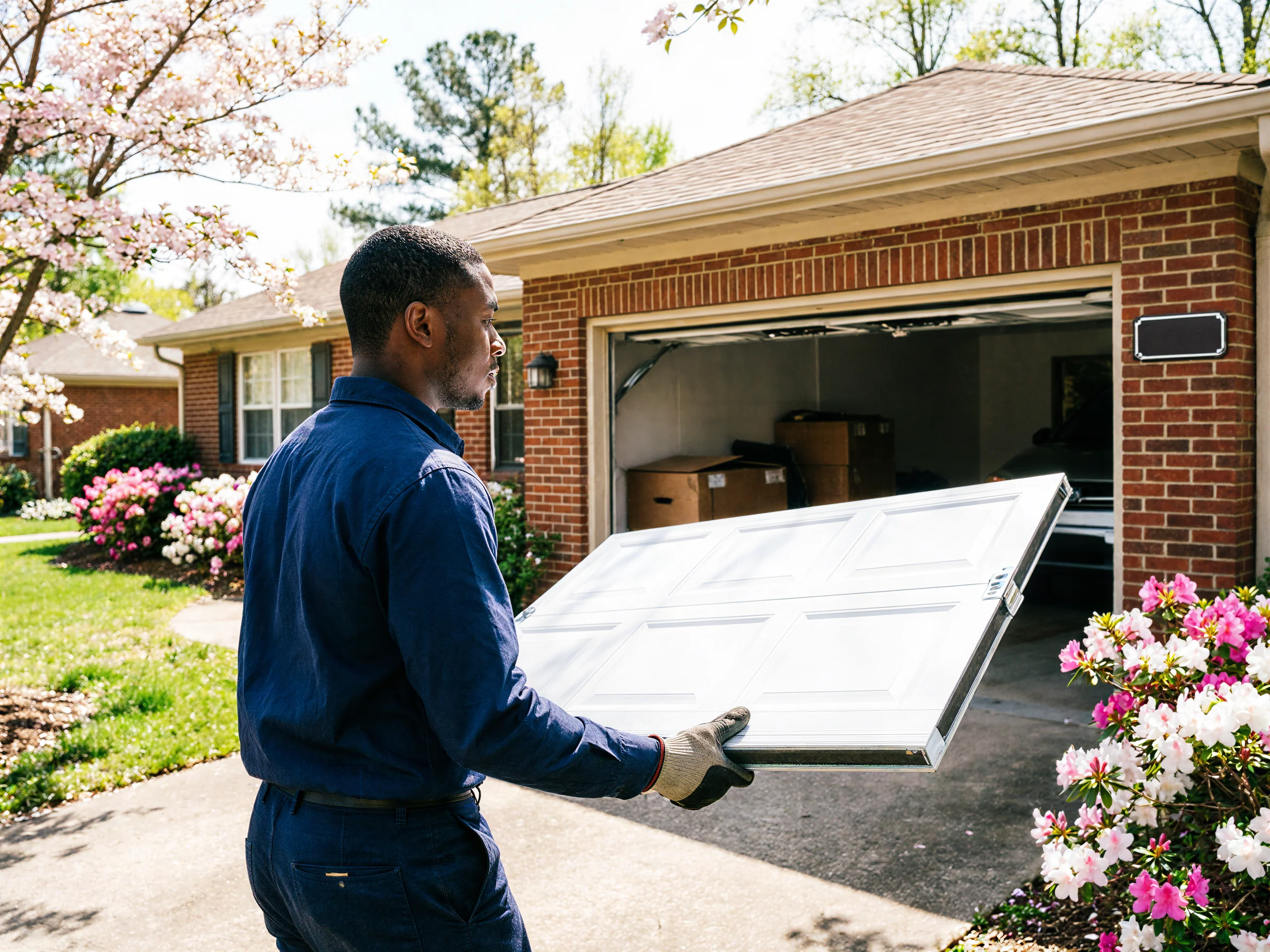
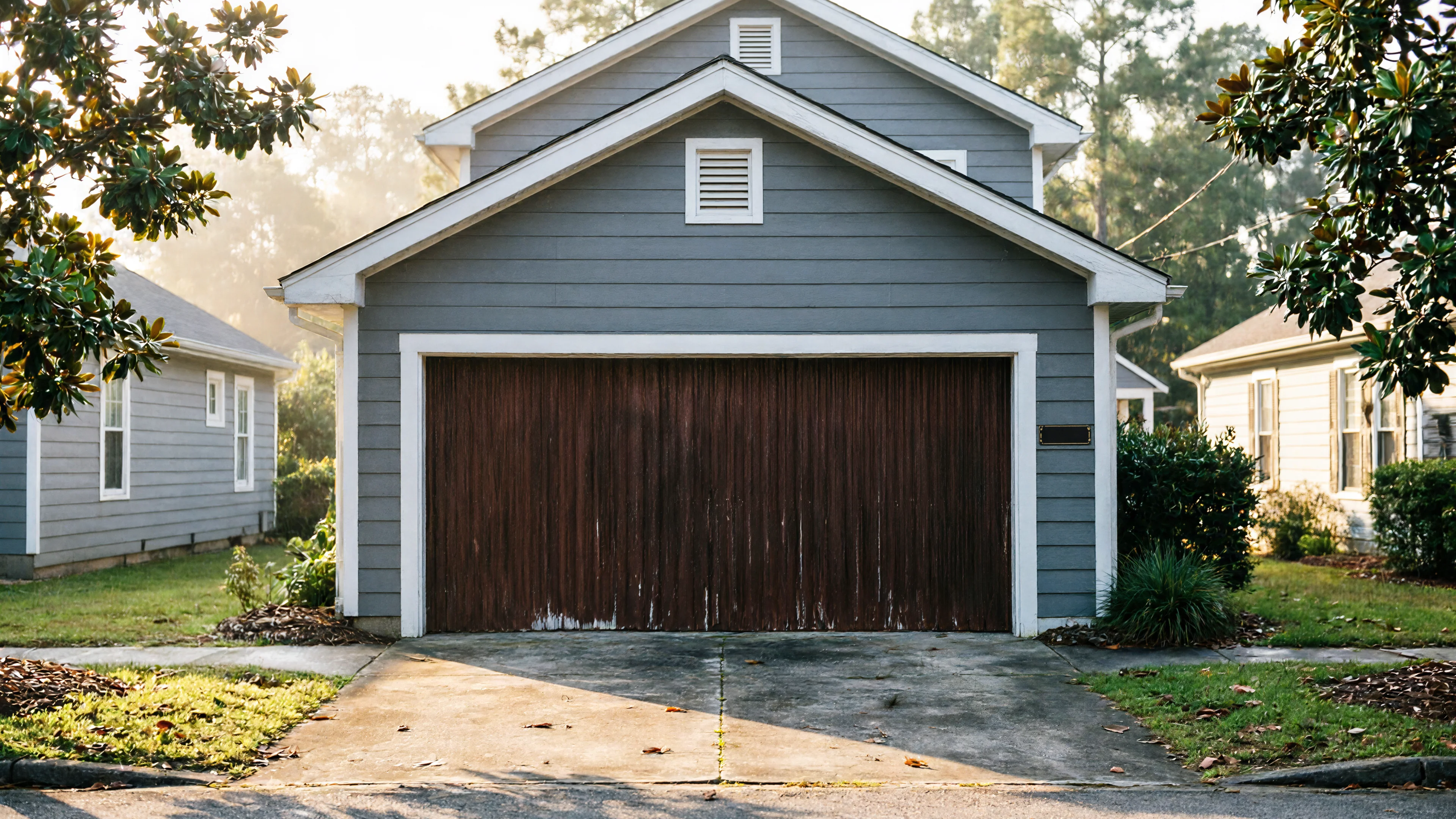
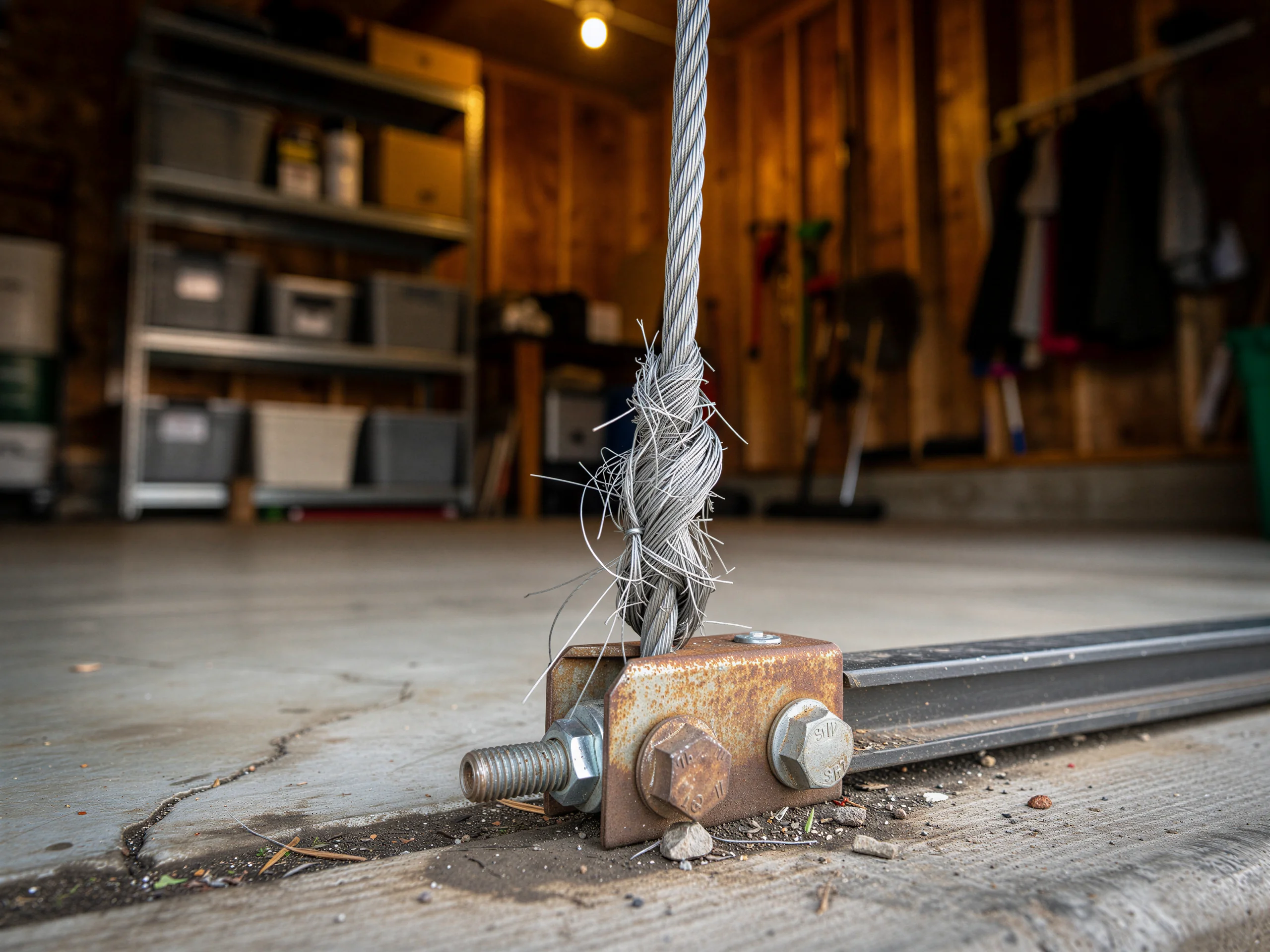
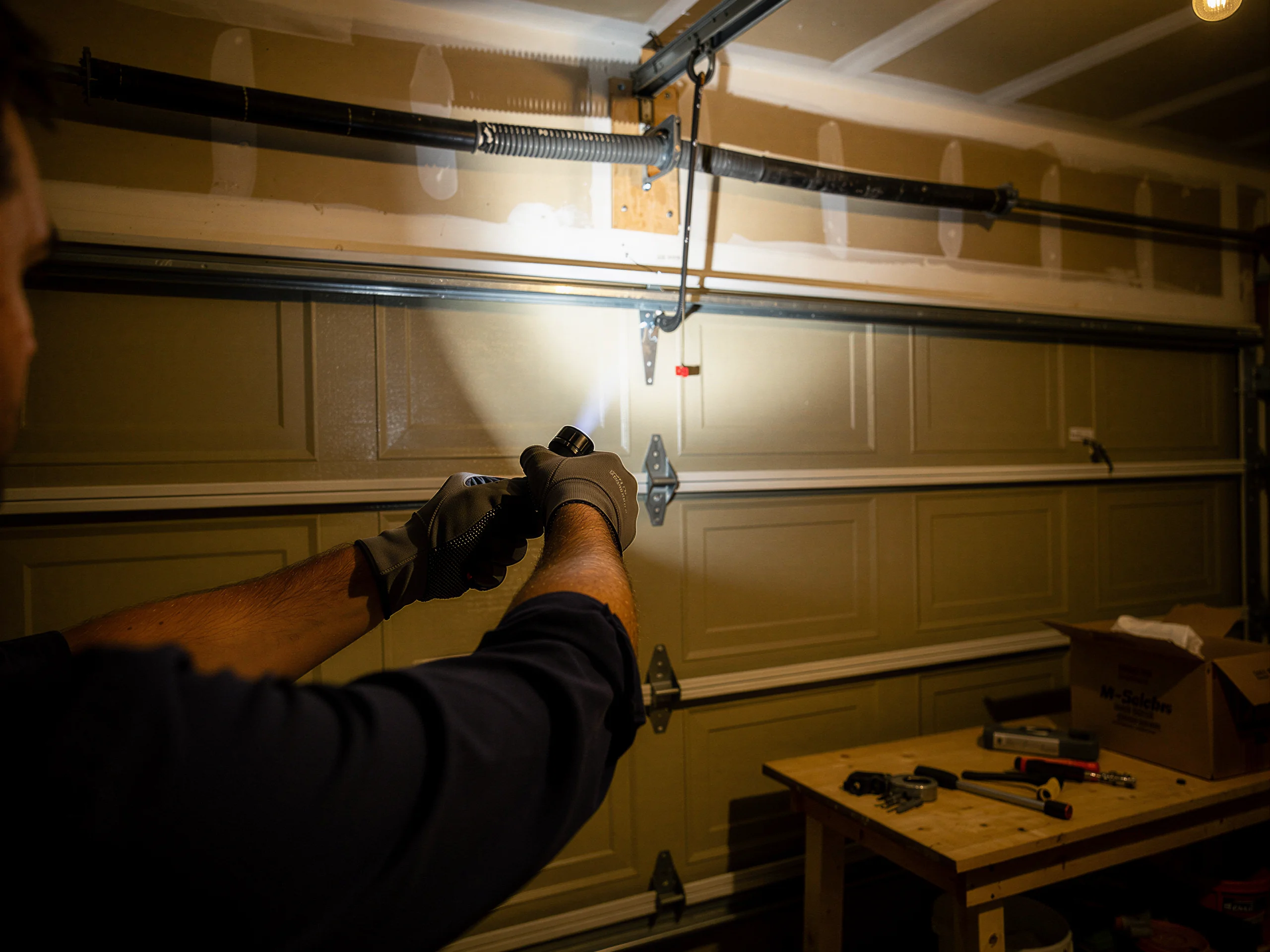
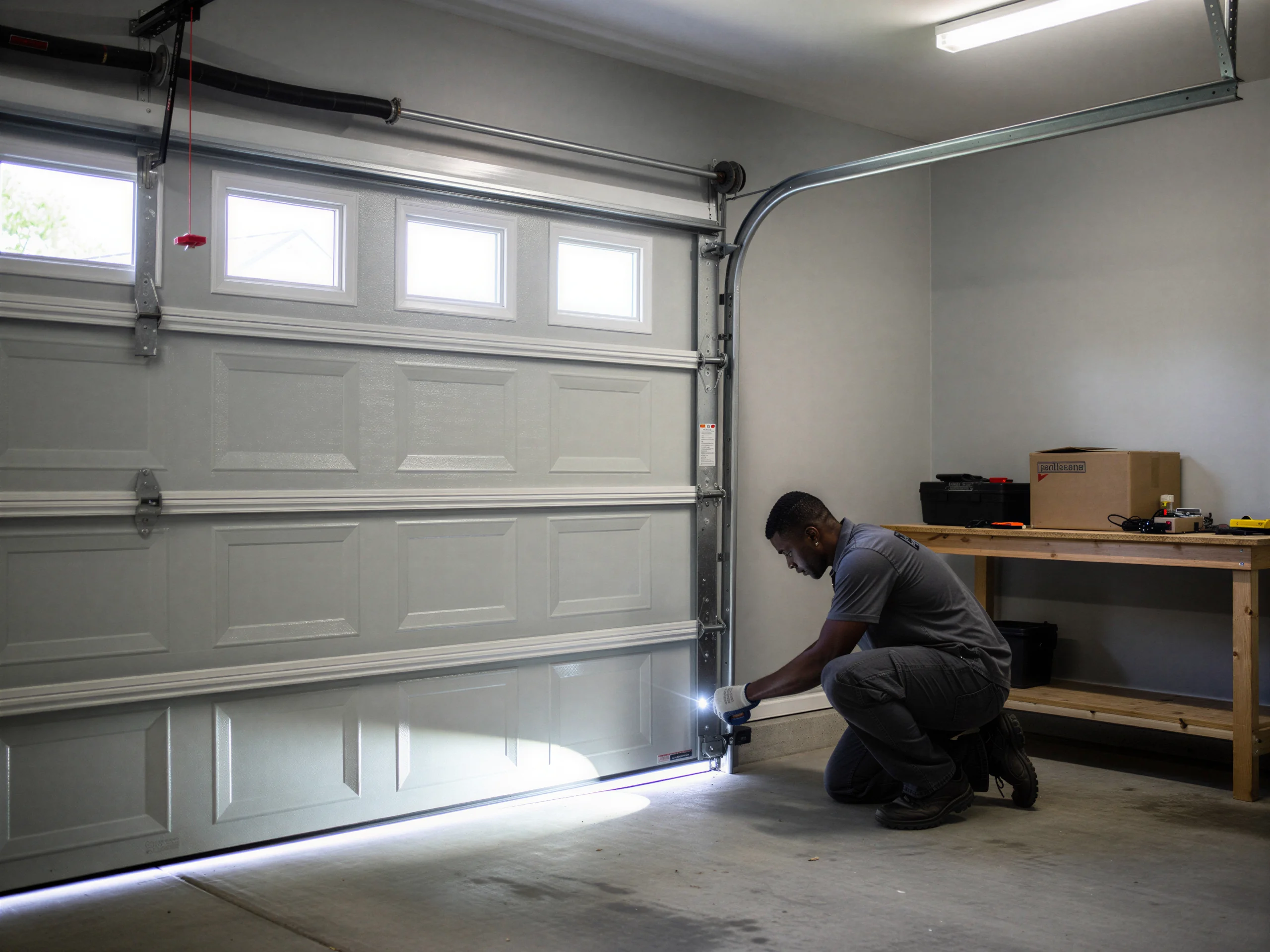
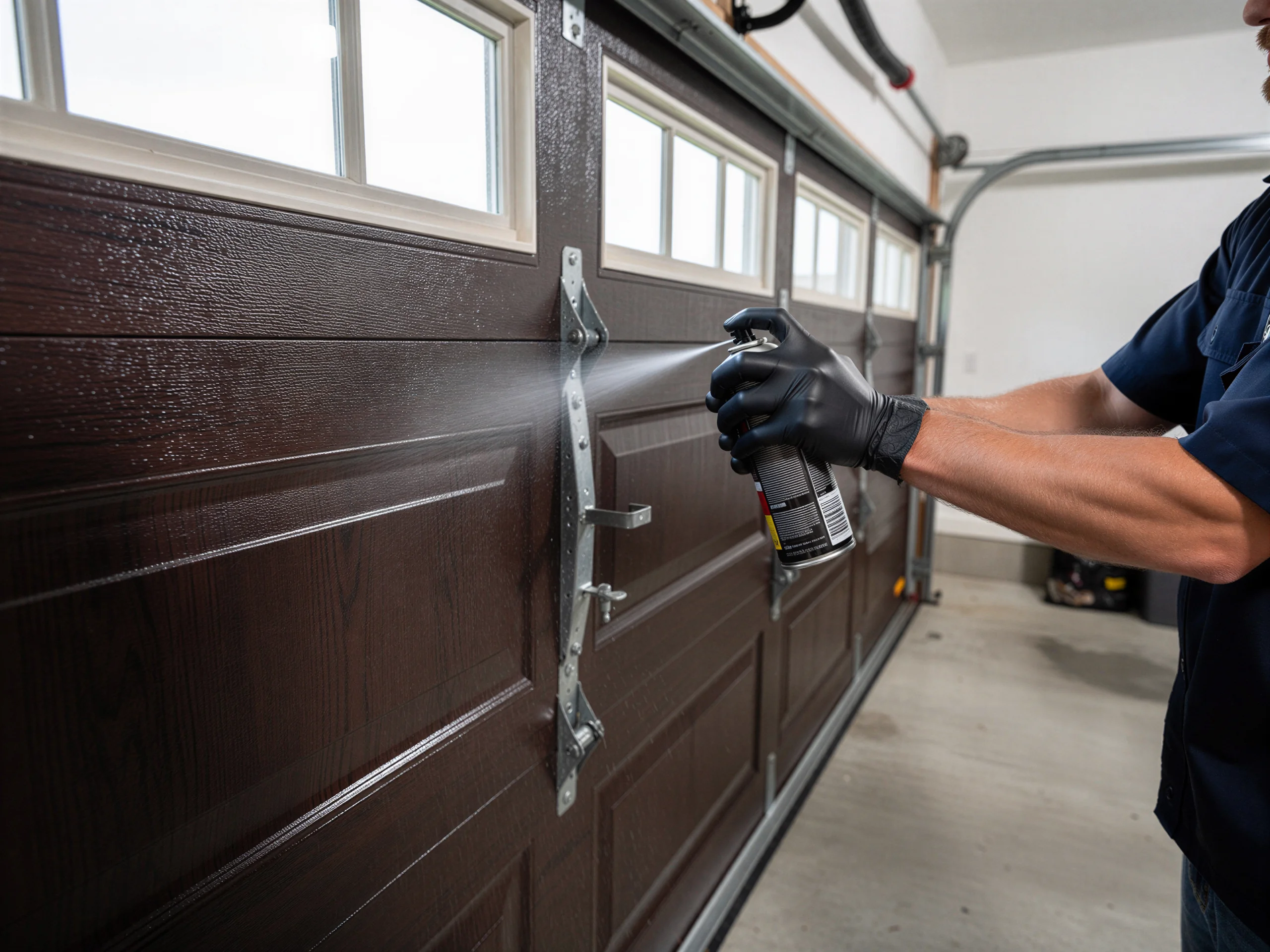
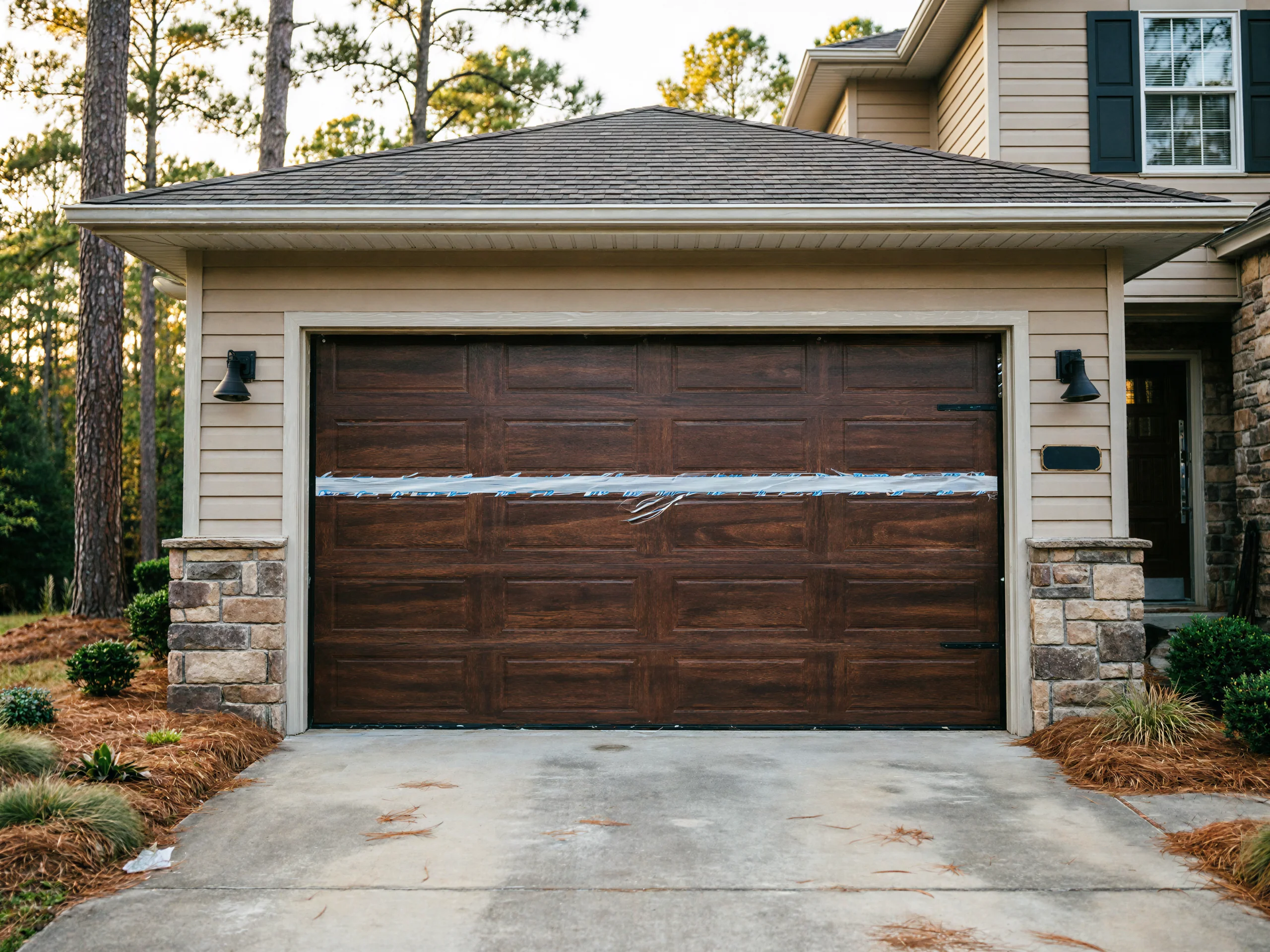
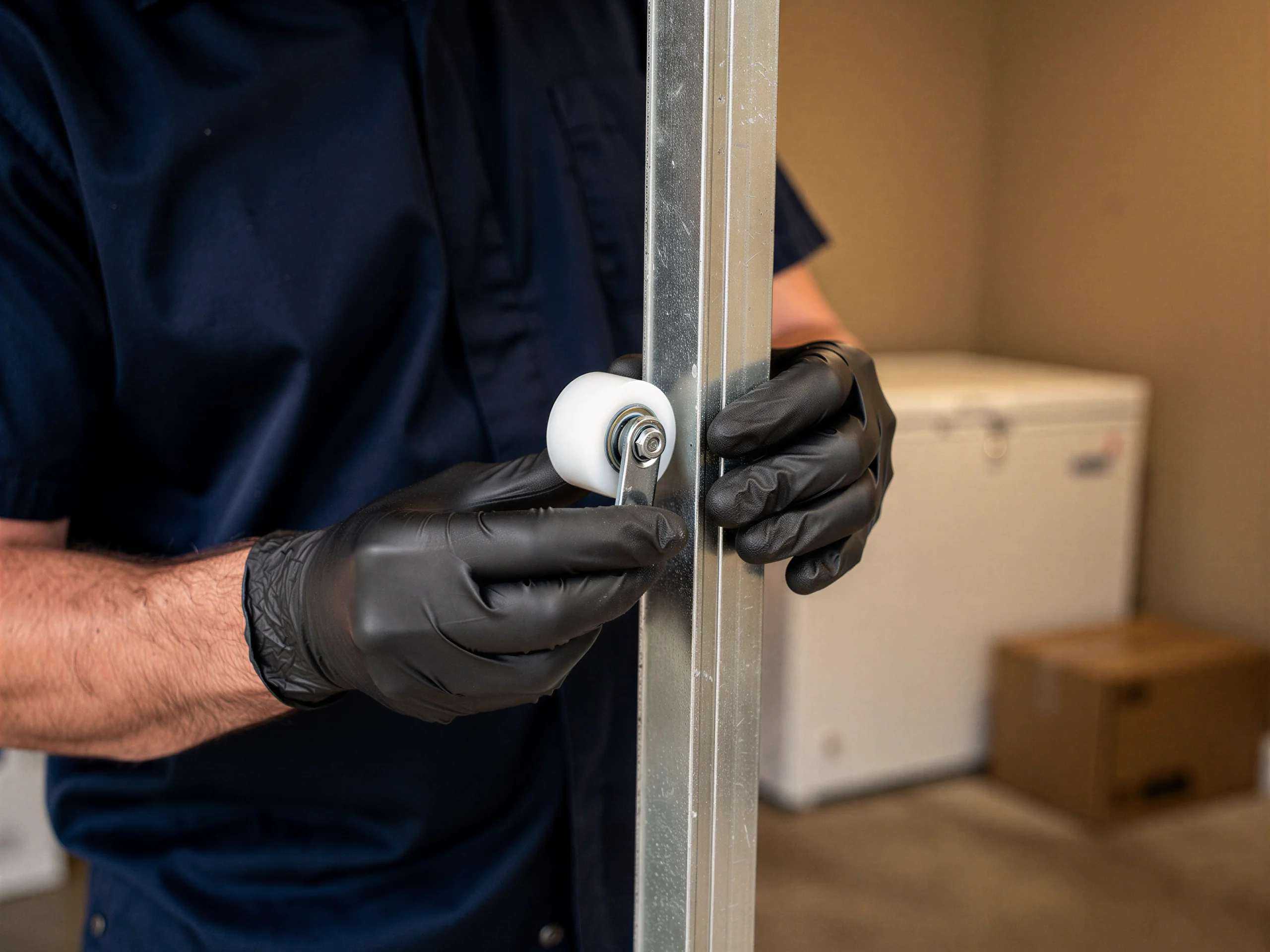
The fault pattern here isn't the one you'd see on an older street in the broader service area, where original one-piece wood doors and dated torsion hardware are still common. Nolensville's housing stock sits mostly after 2000, so the doors are newer, insulated, steel sectional units - and the failure mode that brings us out is almost always impact damage to one section, not age-related hardware failure across the whole door.
That newness cuts both ways. The door itself is younger and sound, but the specific panel profile is tied to whichever builder grade went into that subdivision, and those profiles aren't universal stock the way older generic steel sections were. A homeowner here with median household income well above the service-area average of $92,292 is also more likely to want a true color and texture match rather than accept a visibly different panel, which pushes the job toward factory ordering rather than a same-day generic swap.