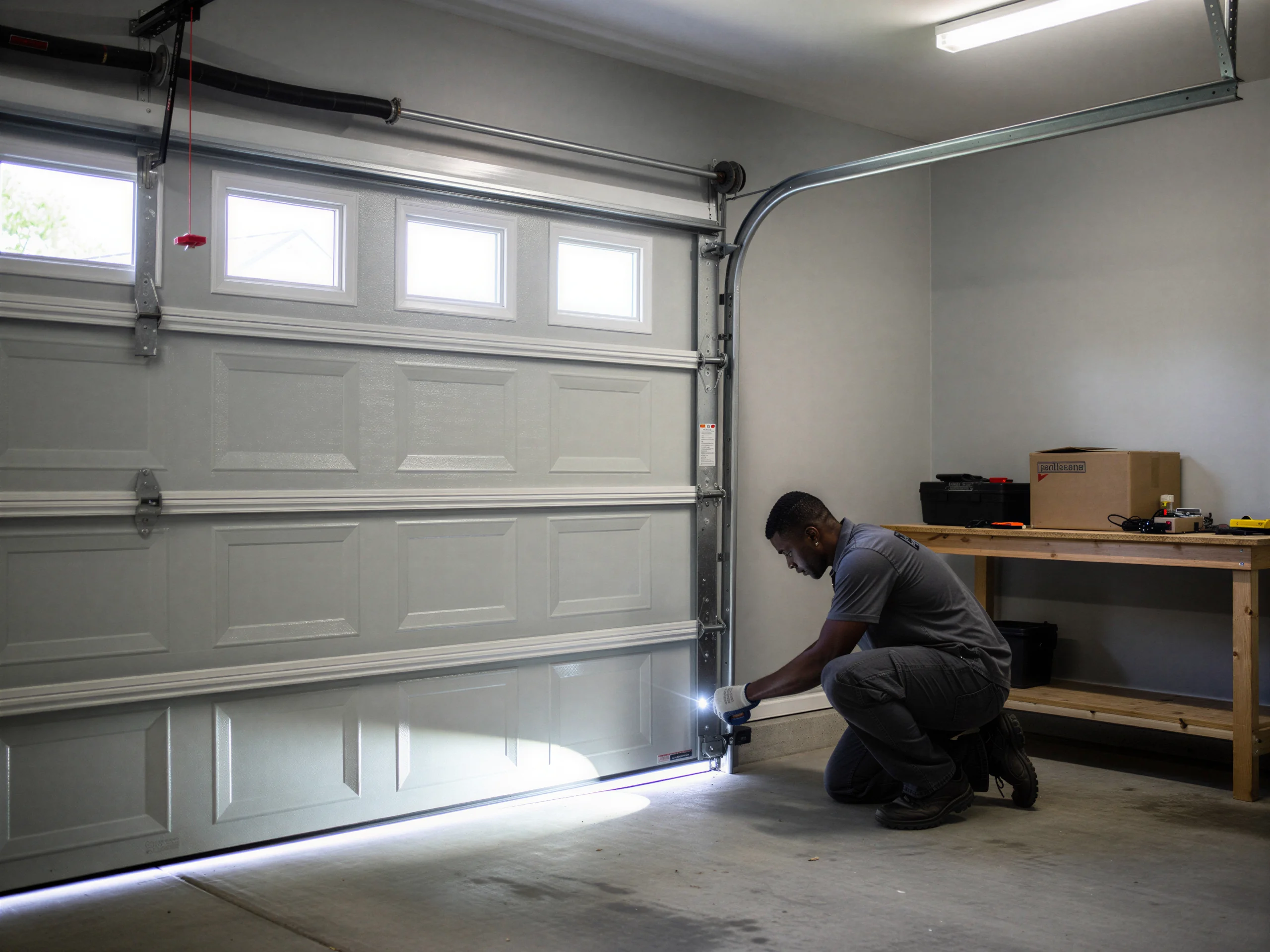
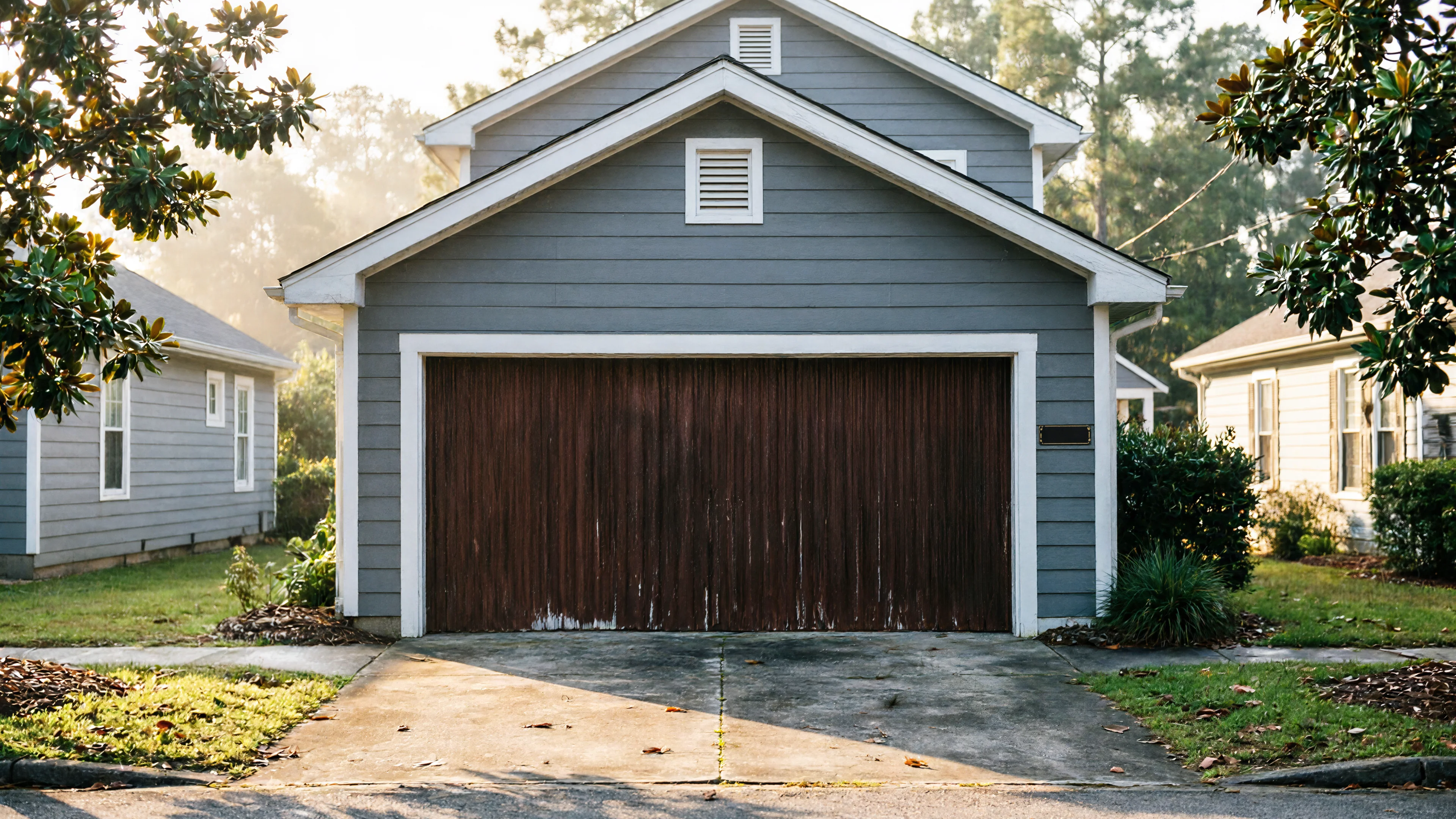
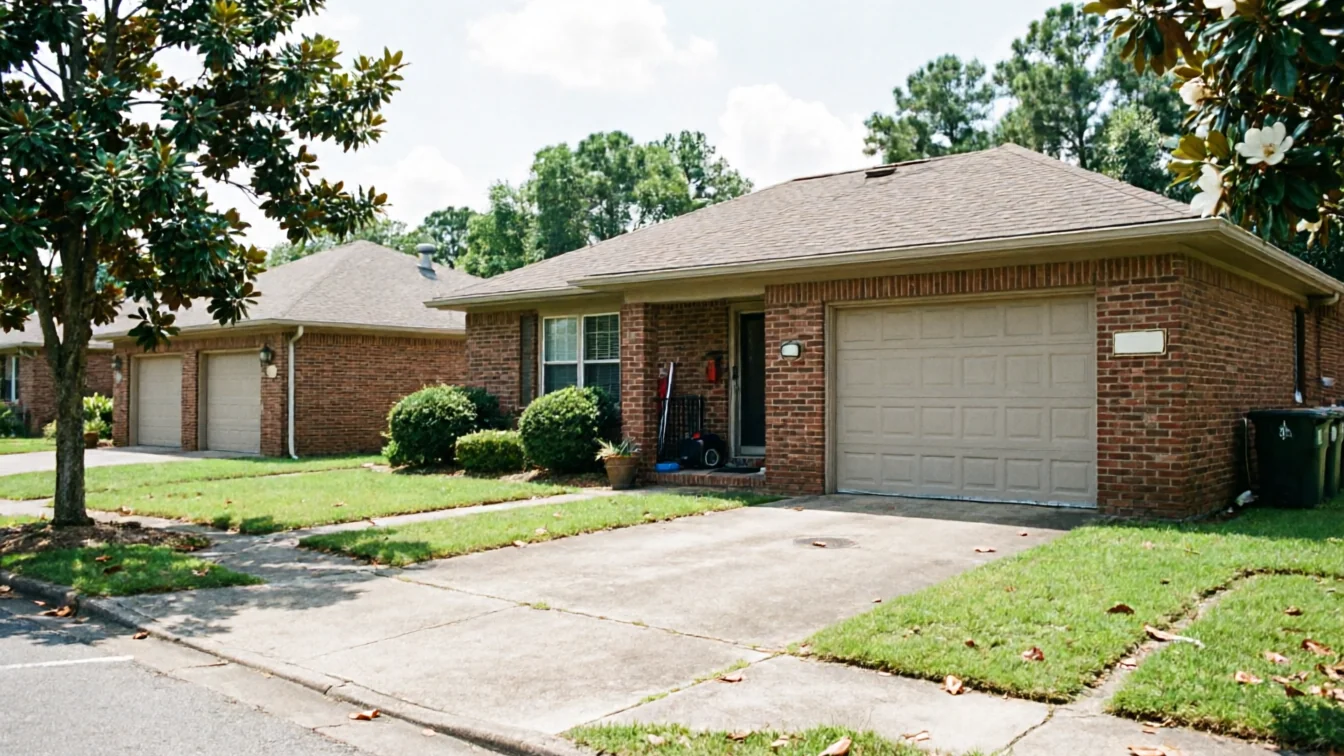
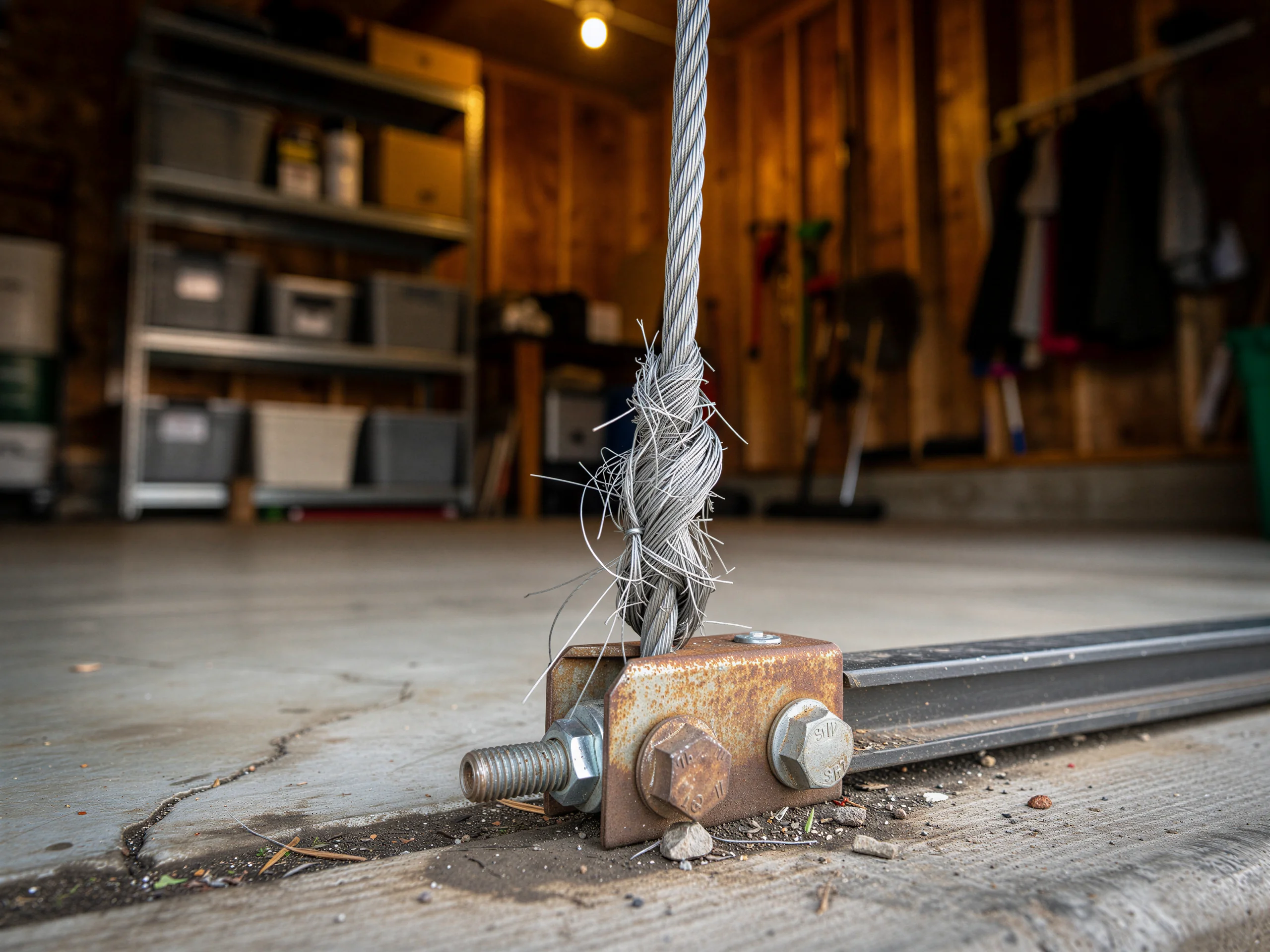
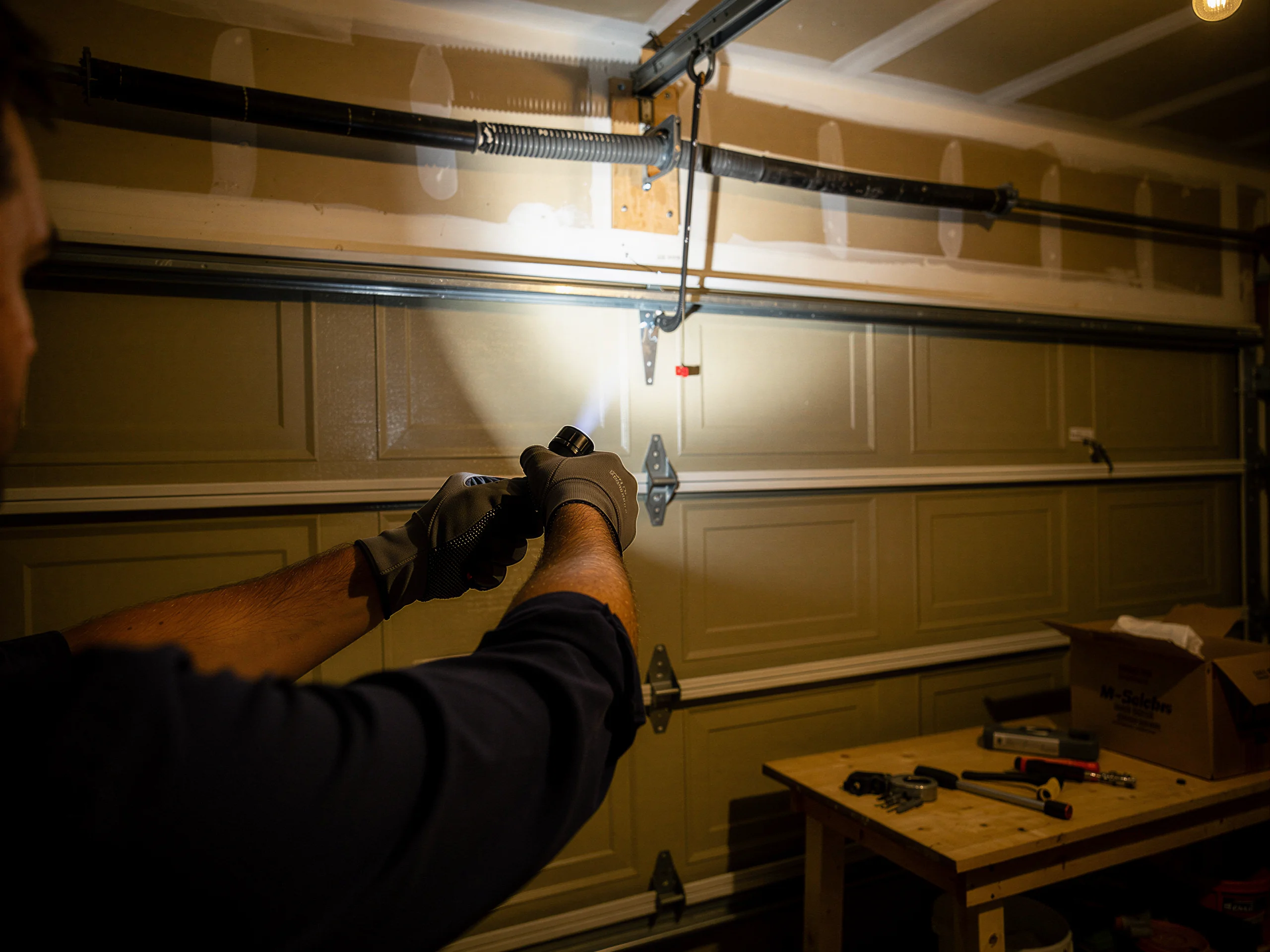
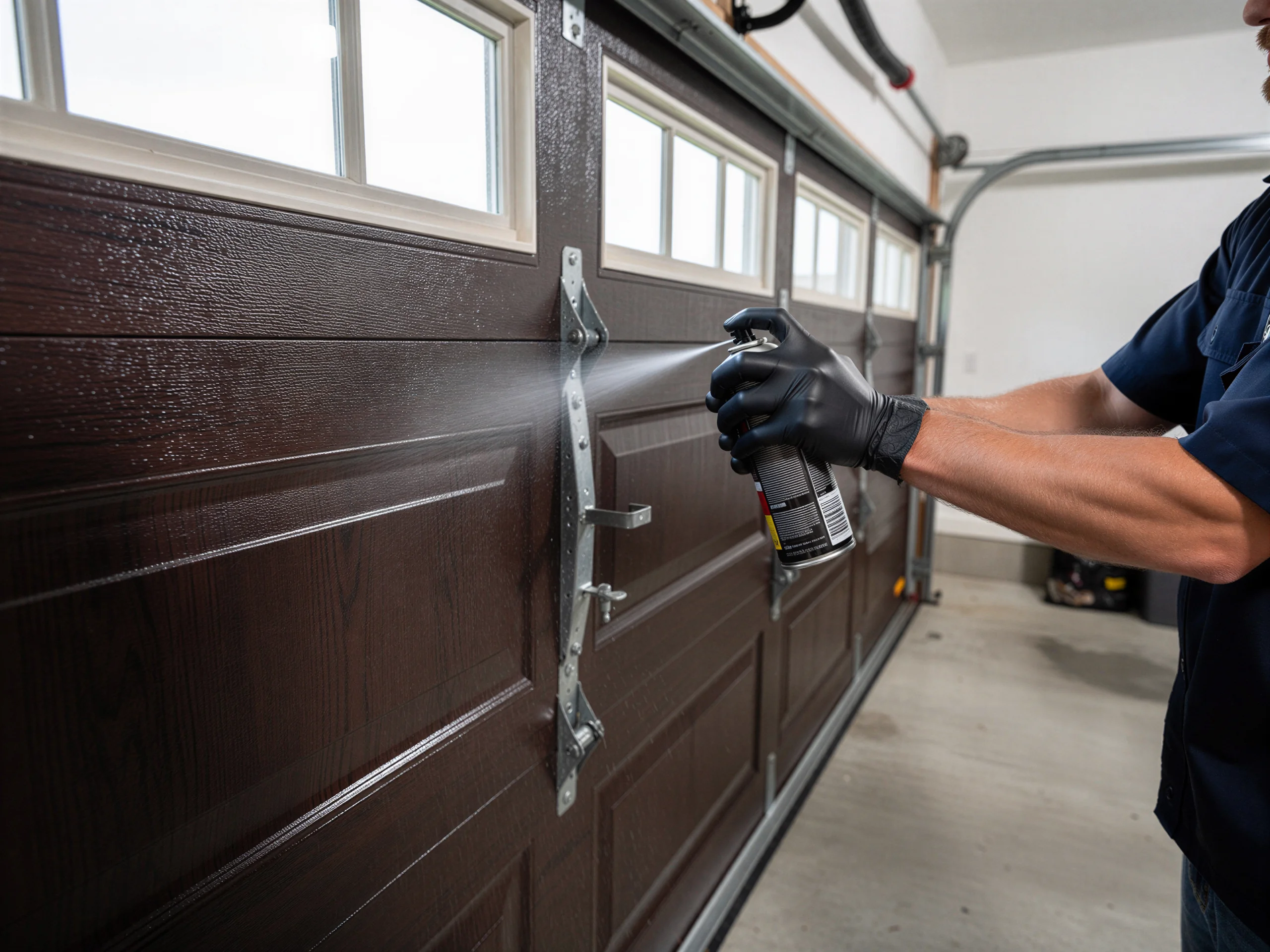
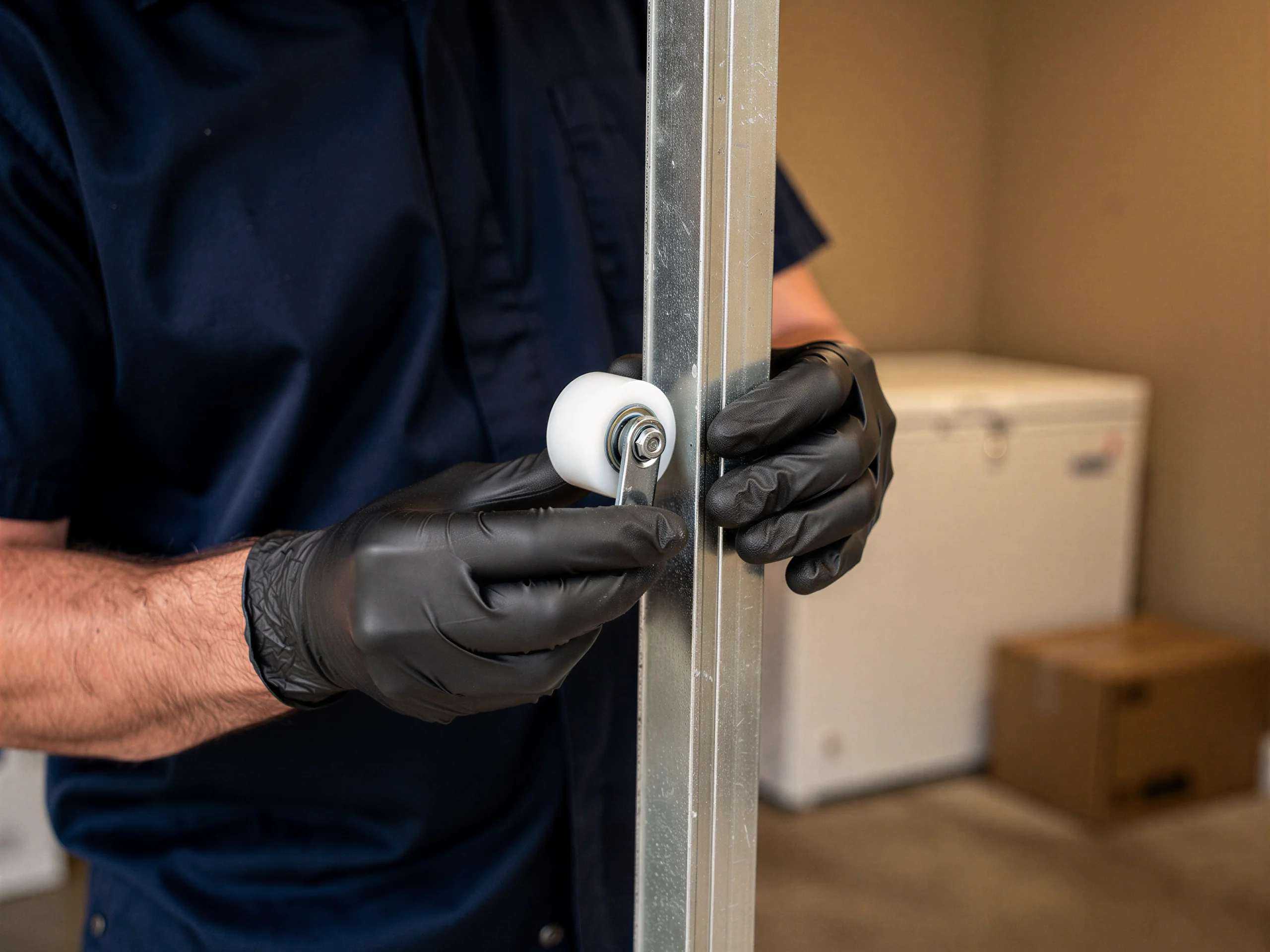
The service area sits in a cold moderate climate band, which means real temperature swings through the year - not brutal, but enough to stress metal and lubricant on a cycle. On a door built in the 1990s, that cycle is accounted for in the hardware spec. On a door with 1970-era bones, it isn't. Steel contracts and expands at the same rate no matter the install date, but the tolerances on older track and the metallurgy in older springs weren't built for fifty-plus years of that cycling. What we see in Forest Hills more than in the newer sections: cables that have stretched unevenly, rollers worn oval instead of round, and torsion springs that have simply outlasted their rated cycle count and are now failing without warning instead of wearing down gradually. None of that is unique to this one address - it's what happens to any door this age in this climate - but it shows up here more often because the housing stock skews older than the area median.