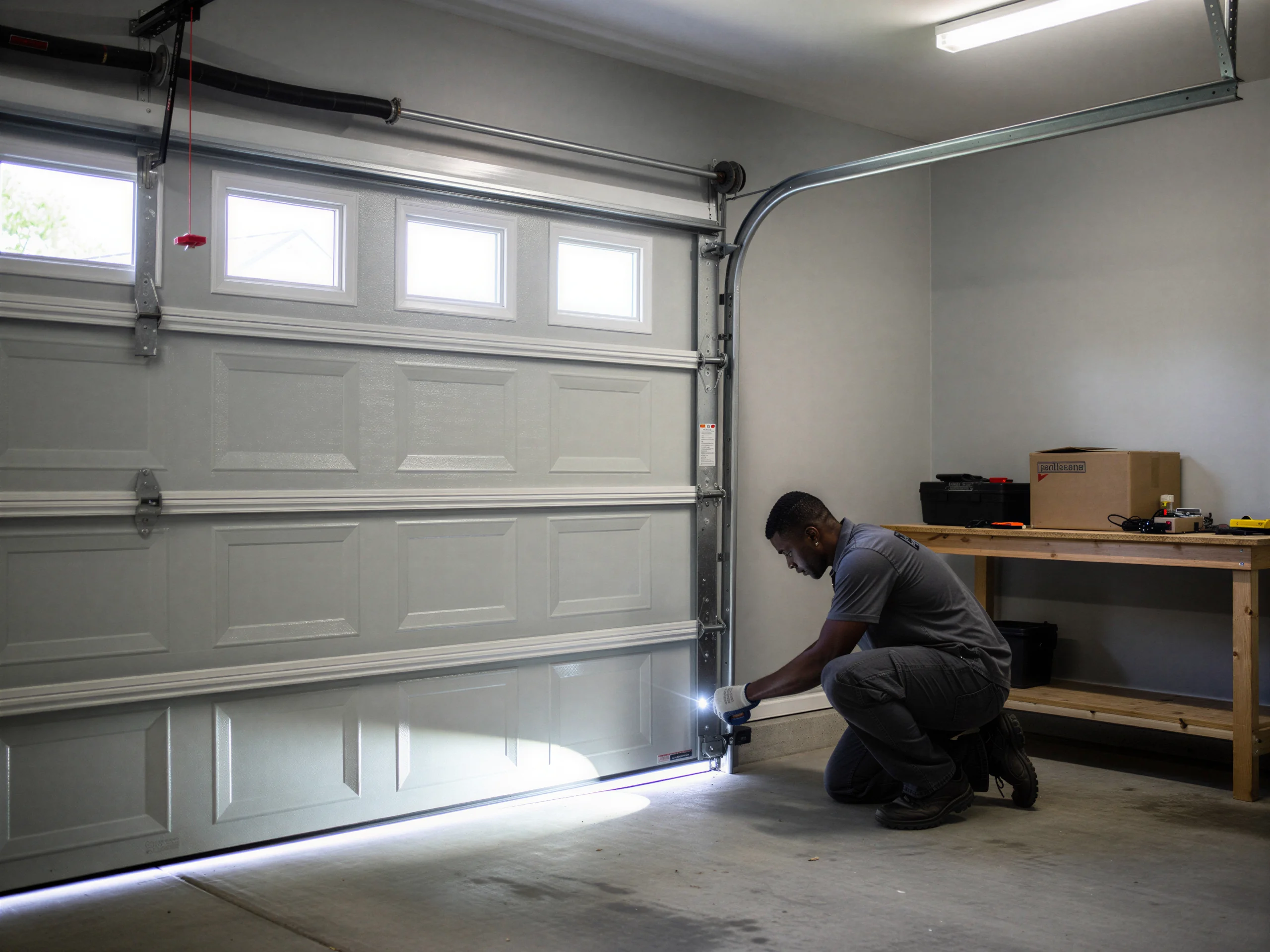
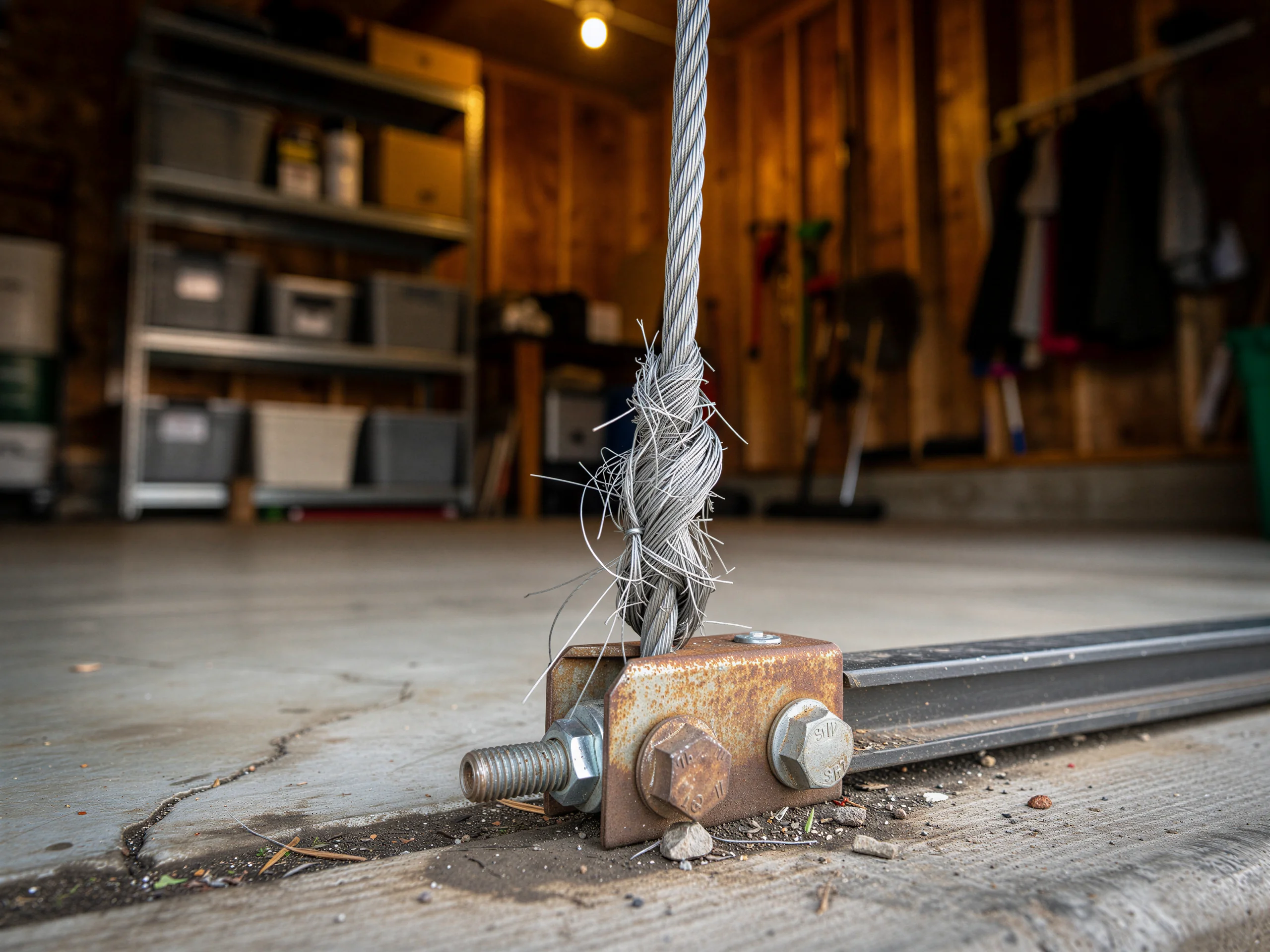
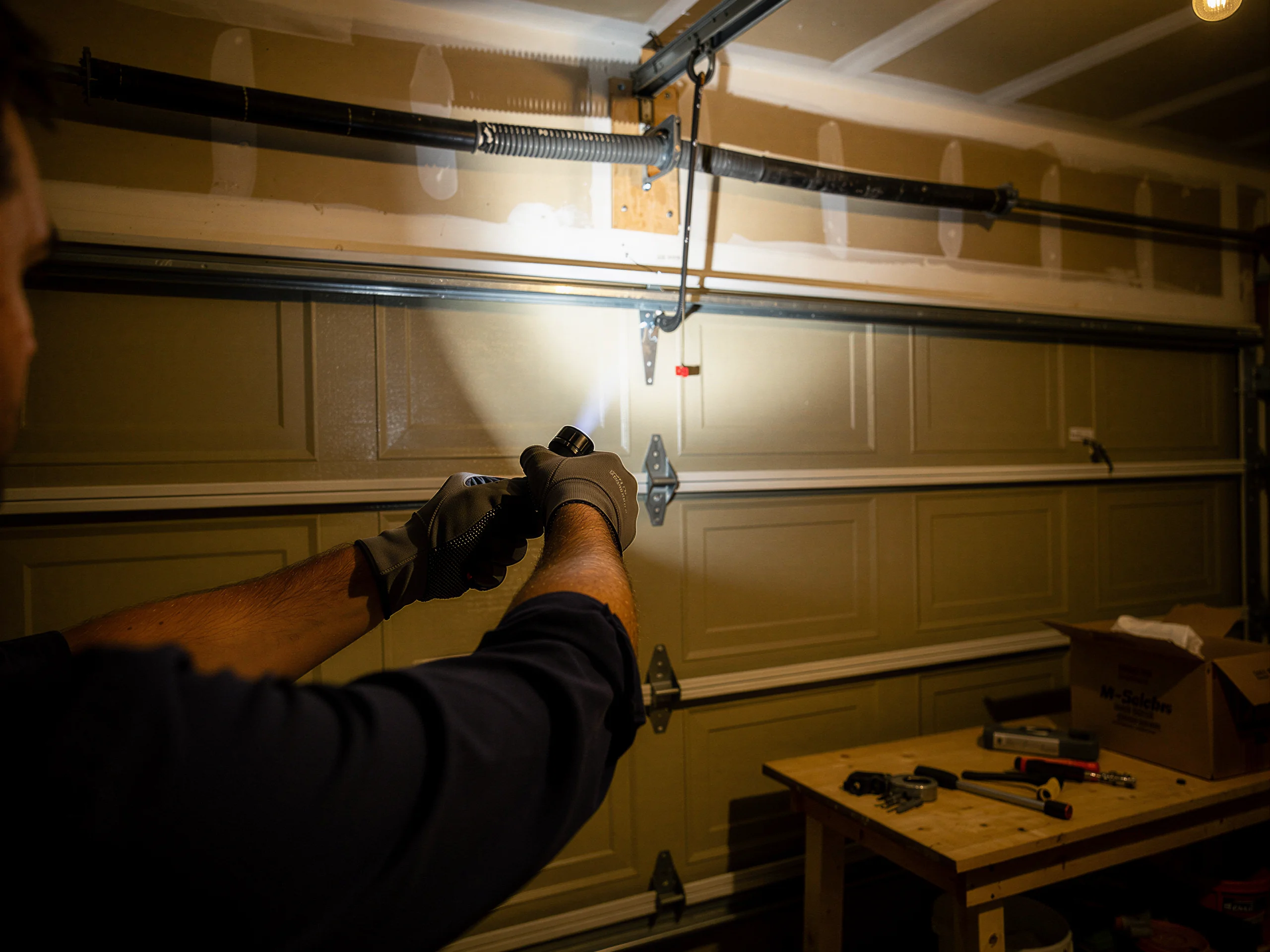
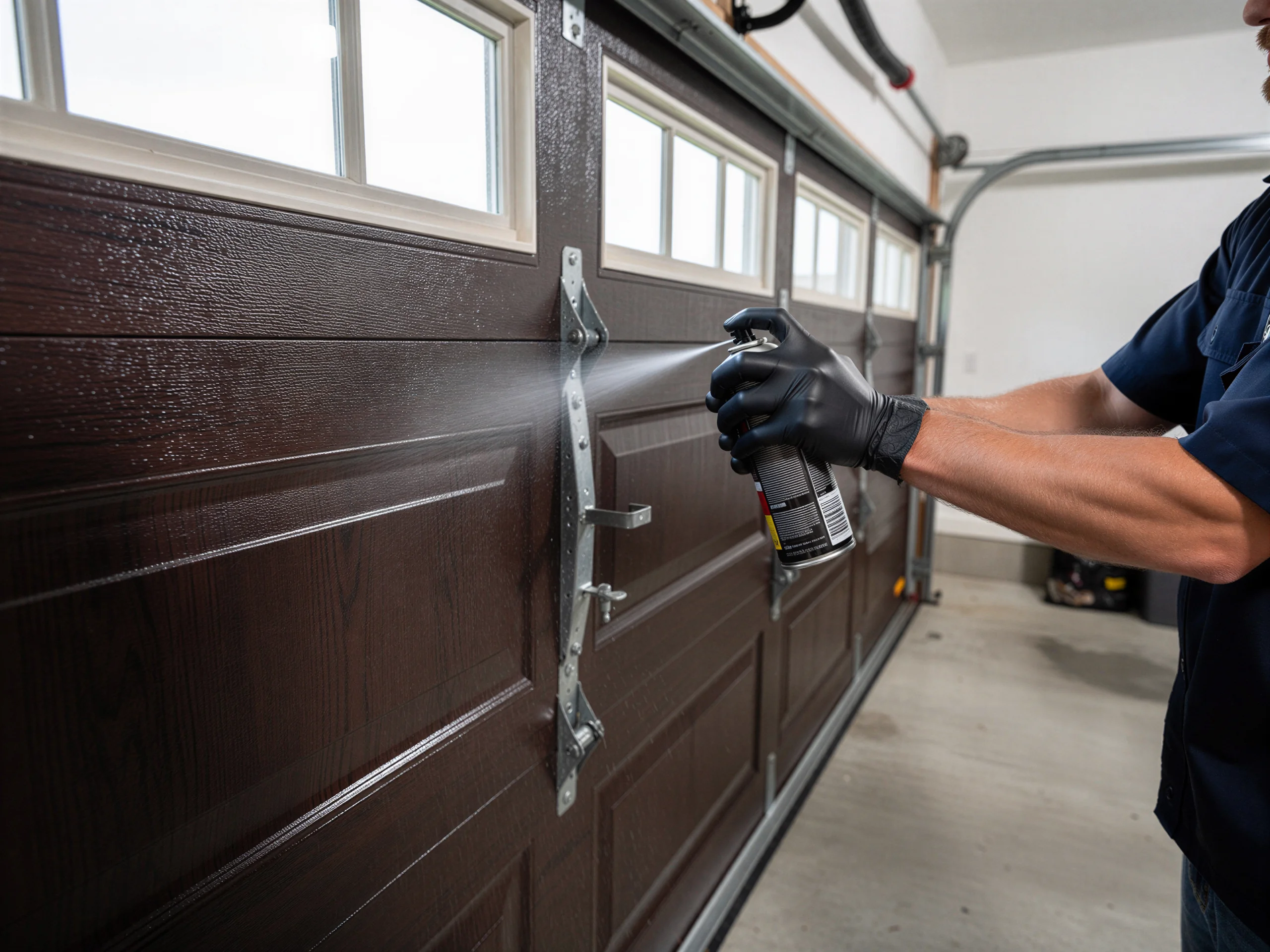
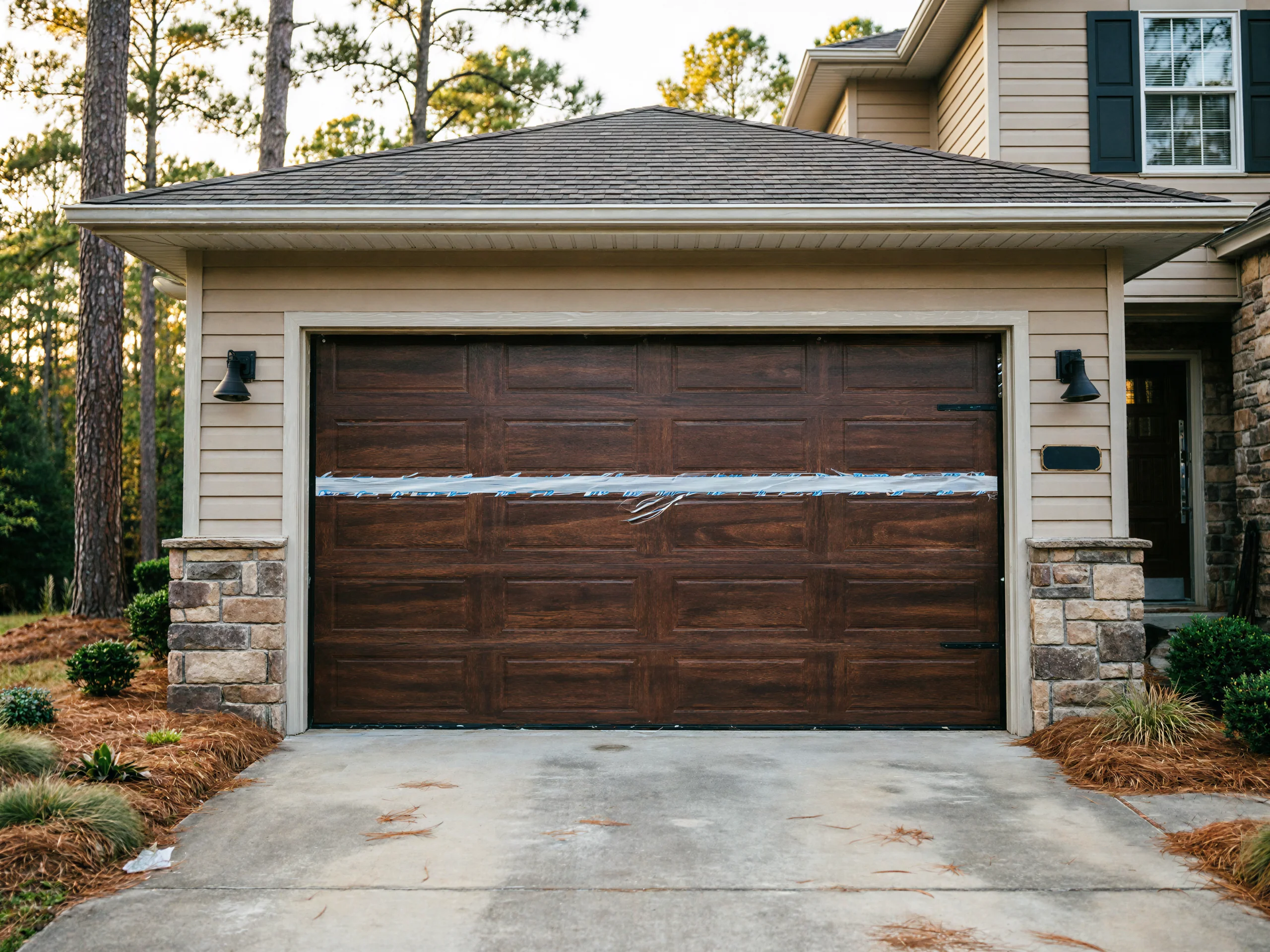
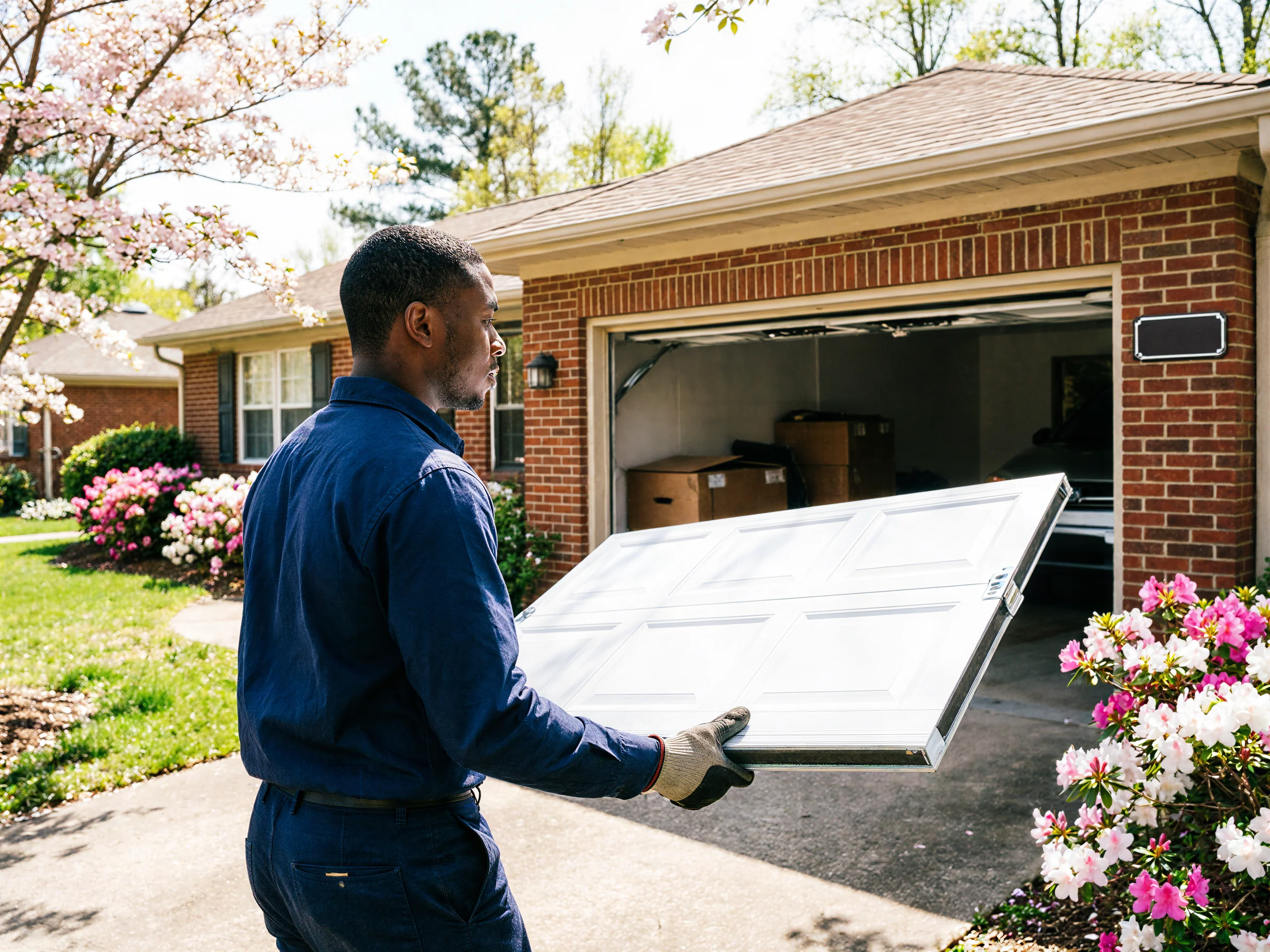
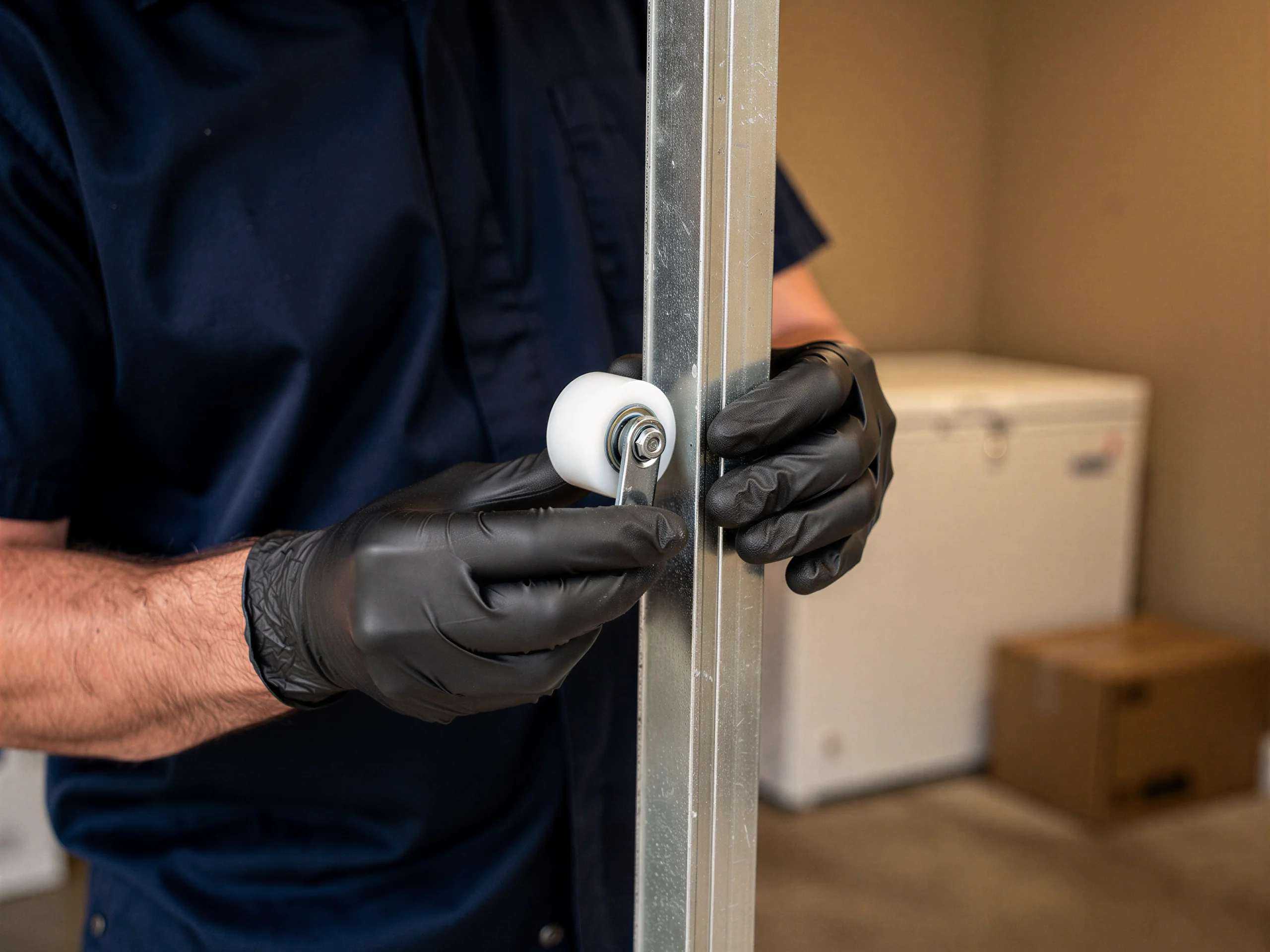
The region sits in a cold-moderate climate band, and that affects a 2005-built door differently than it affects an older one. Thin-gauge insulated steel panels expand and contract with temperature swings in a way that heavier wood-core doors from decades earlier simply don't - over enough winters, that movement works screws loose at the hinge points and can throw a track out of square by a fraction of an inch, which is enough to make a door bind. Newer torsion springs are also wound tighter for the heavier double-door loads common on this stock, so when one does fail, it tends to let go harder rather than wearing down gradually the way an older, lighter spring often does. None of this is exotic, but it's a different failure pattern than what we see on older doors nearby, and it's why a repair here should start with the door's actual age and weight, not a generic spring swap.